The most versatile model for welding, CNC tending, packaging and first cobot deployments
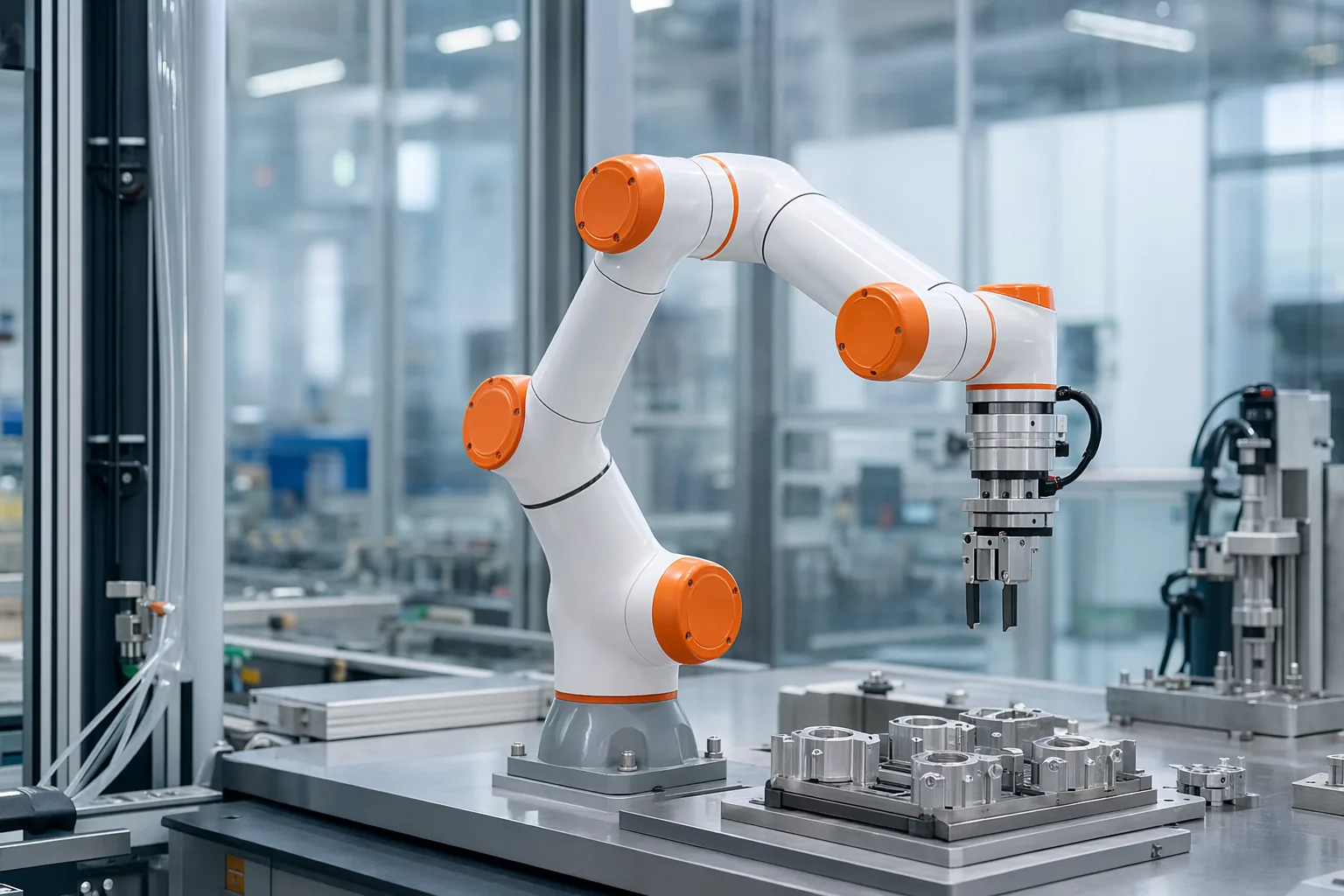
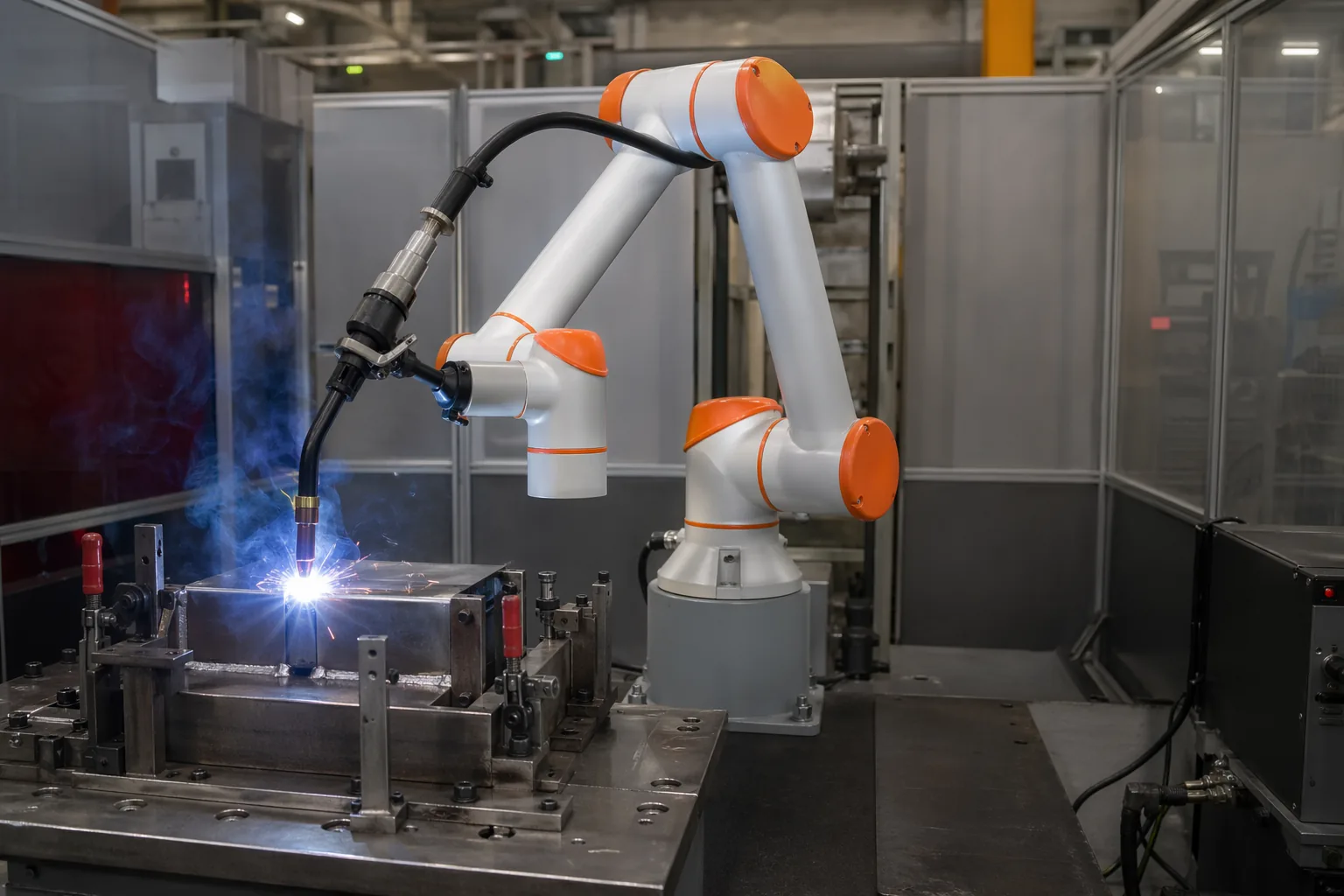
Manu 10 is usually the best base for a first welding cell. It gives enough reach and payload for the torch, cable set and real production detail without oversizing the station.
| Payload | 10 kg |
| Reach | 1200 mm |
| Repeatability | ±0.03 mm |
| Degrees of freedom | 6 axes |
| Robot weight | ~30 kg |
| Protection class | IP54 (IP65 optional) |
| Joint J1 | ±360° @ 150°/s |
| Joint J2 | ±360° @ 150°/s |
| Joint J3 | ±165° @ 150°/s |
| Joint J4 | ±360° @ 180°/s |
| Joint J5 | ±165° @ 180°/s |
| Joint J6 | ±360° @ 180°/s |
| Interface | 10.1" Tablet / Web App |
| Communication | Ethernet, Modbus |
| I/O | 16 DI, 16 DO, 2 AI, 2 AO |
| Programming | C#, C++, Python, Java, ROS |
| Power supply | 100-240V AC, 50/60Hz |
| CE | Directive 2006/42/EC |
| Safety | EN ISO 10218-1 |
| Design | EN ISO 12100 |
| Electrical | EN 60204-1 |
| Control | EN ISO 13849-1 |
Manu 10 is the safest starting point when you need one model that covers most real production scenarios.
A practical base for MIG/MAG cells, especially for teams starting robotic welding.
Loading and unloading CNC machines when detail size and reach exceed what Manu 5 handles comfortably.
Packaging, box handling and end-of-line moves that need more margin than a compact cobot.
Assembly and process support for medium-size parts where reach matters as much as precision.
Light palletizing or transfer tasks before the process truly needs Manu 20.
Grinding, finishing and tool processes with controlled path repetition.
We will confirm whether Manu 10 is the right production fit or whether your process should move straight to Manu 20.