
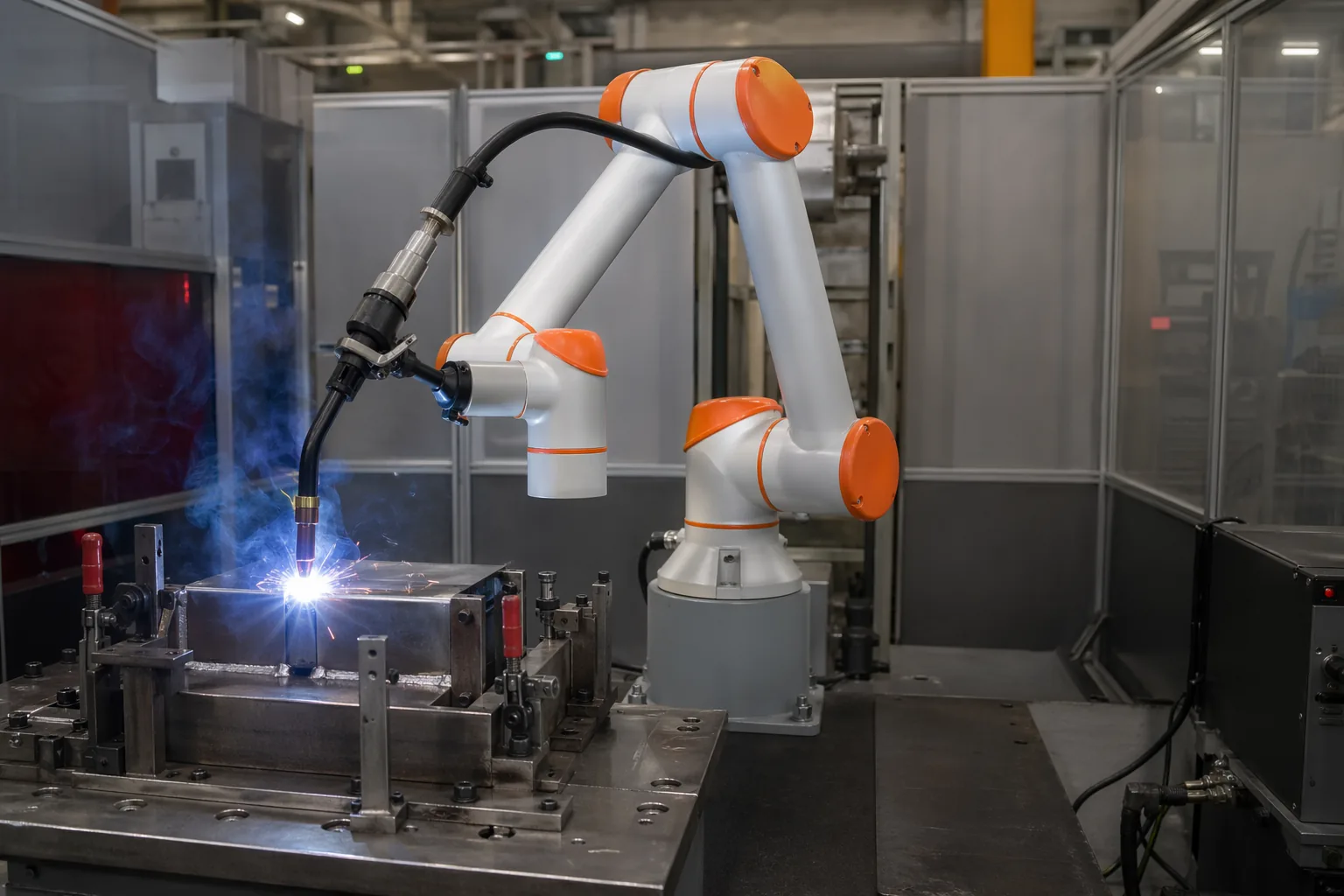
Welding
Repeatable quality and stable weld rhythm
A strong fit where manual welding is demanding on the operator and the process needs stable results across repeated parts.
Not every process needs a major plant transformation. Very often the right first step is one well-scoped station with a properly matched cobot and a clear implementation plan.
These are common areas where a cobot can quickly improve repeatability, operator availability or the rhythm of a station.
A strong fit where manual welding is demanding on the operator and the process needs stable results across repeated parts.
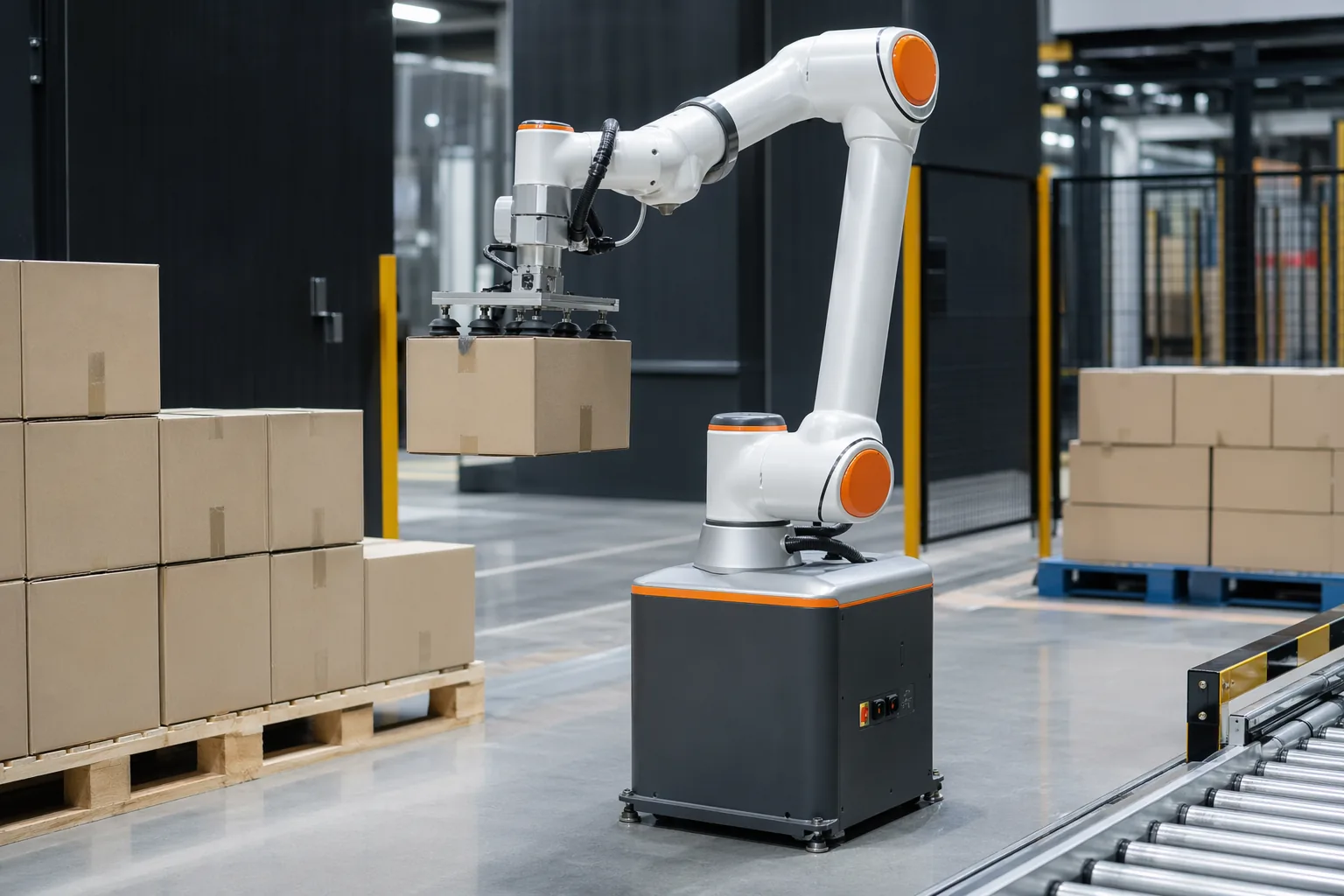
Useful where the last step of the process requires repetitive stacking and regularly consumes operator time.
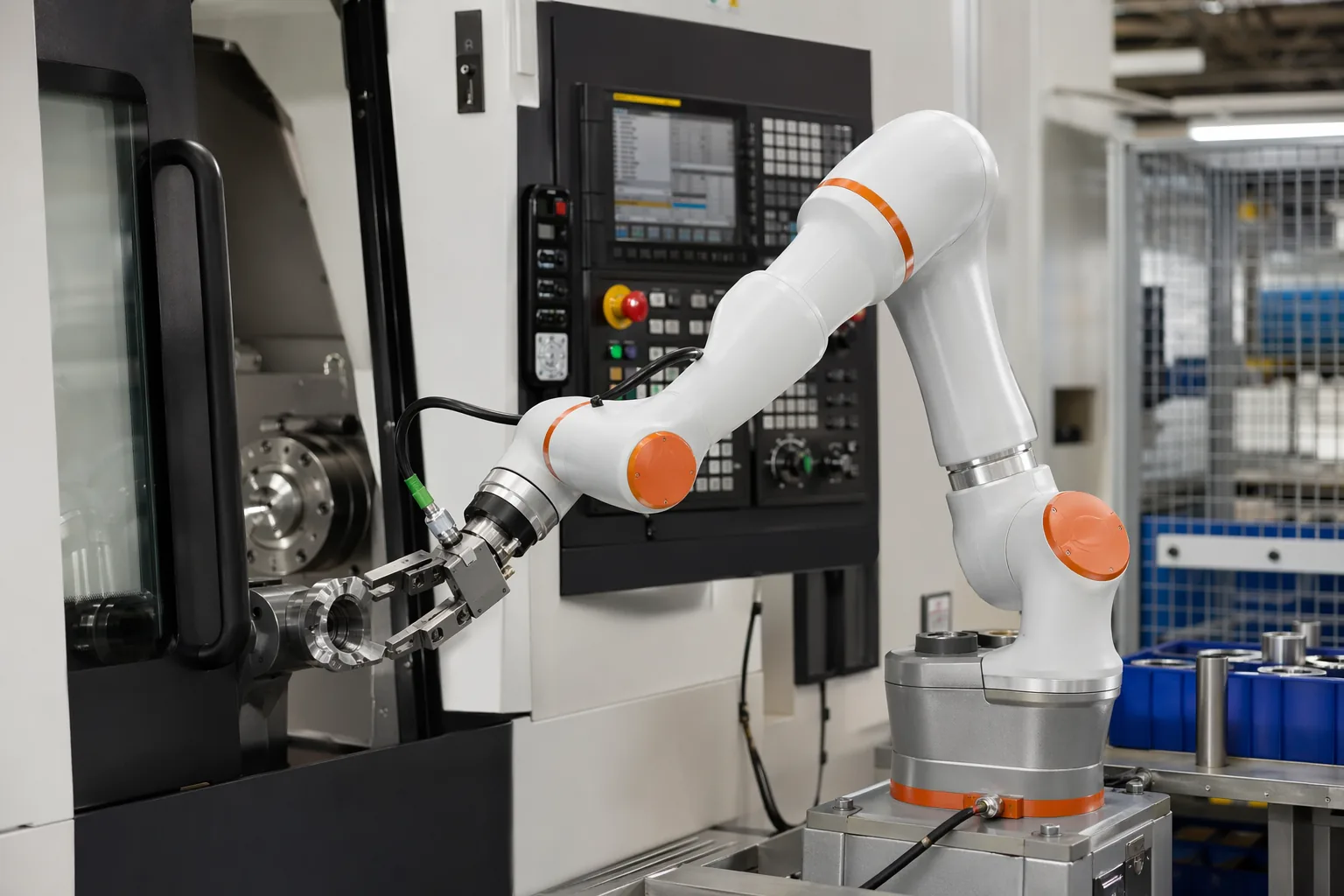
A good direction when one operator needs to supervise more than one machine or when part loading should become more consistent.
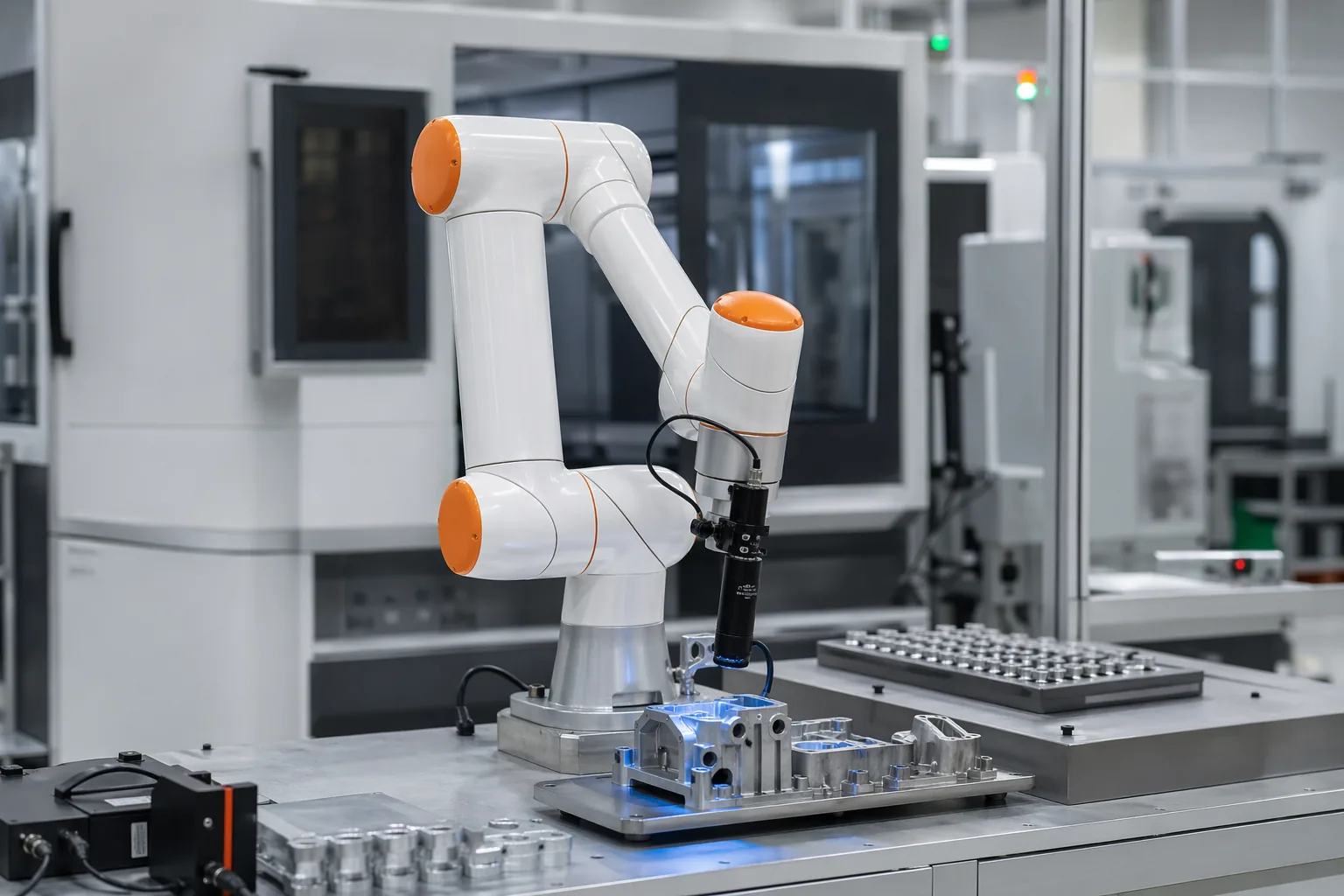
In assembly the cobot fits processes where the path needs to be repeatable while still keeping the station practical for human interaction.
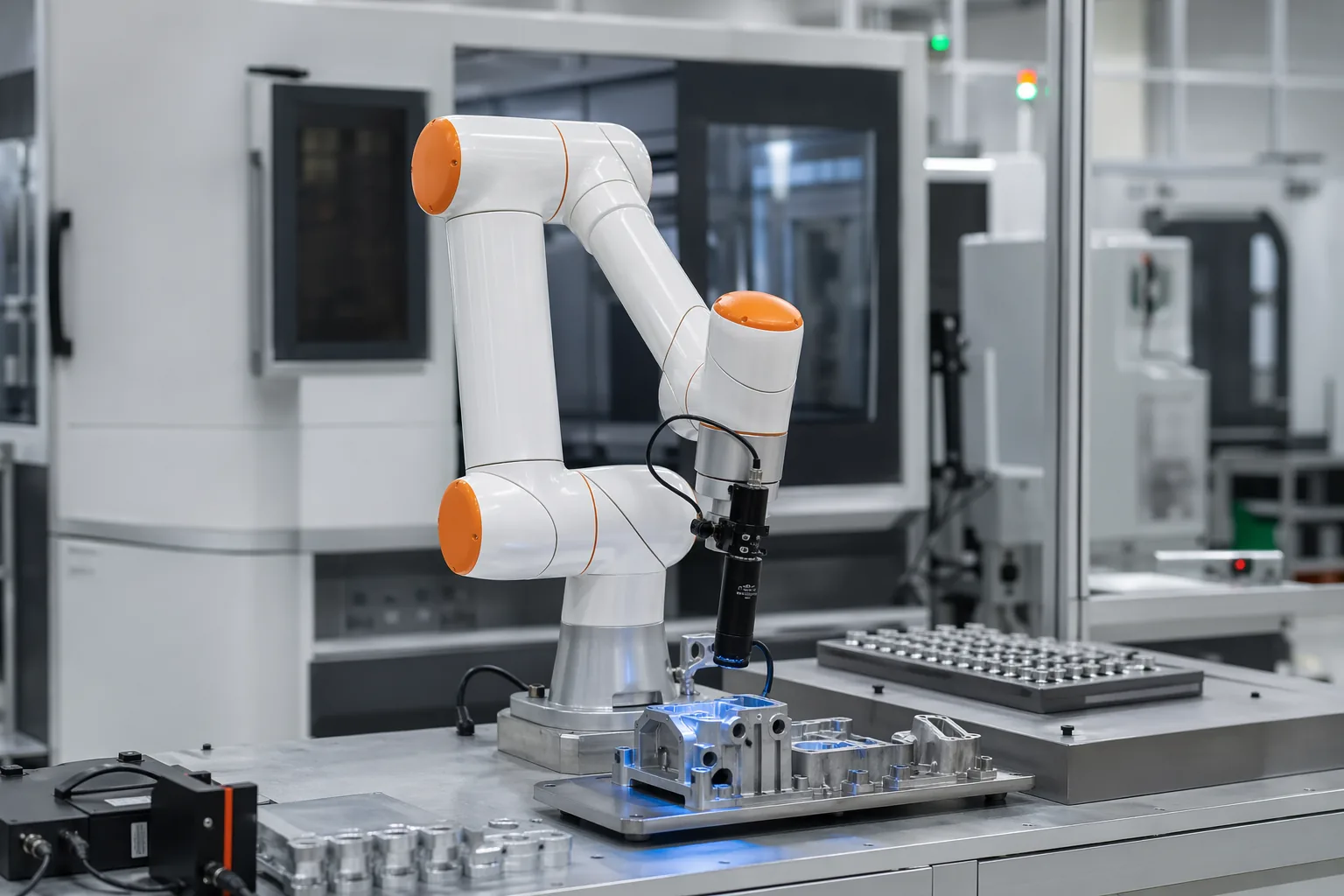
This is useful wherever the part must be presented in a stable way for inspection, measurement or test operations.
At the first stage we do not need full project documentation. A few practical details about the station are usually enough.
We need to understand what the operator does today, how long the cycle takes and where repeatability or strain is strongest.
We review the available space, part flow, tooling needs and the impact on the existing station or machine.
That first review makes it easier to decide whether a pilot, a ready-made bundle or a full deployment path is the right next step.